Building What Modern Football Actually Needs: The thinking behind OPN 2.0
Feb 20, 2026
OPN 2.0 is coming soon and it’s been shaped by a simple question: What does modern football actually need from performance technology?
The game has changed significantly in the past decade. Schedules are tighter. Player movement is faster. Expectations around data and transparency are higher than ever.
Too often, performance platforms fall into one of two categories: they’re either overloaded with features that look impressive but rarely get used, or they’re too basic to support meaningful development.
The real need sits somewhere in between.
That principle has heavily influenced how we’ve approached the future of OPN 2.0.
Structure Over Noise
The strongest environments in football aren’t necessarily the most complex.
They’re the most structured: consistent terminology across departments, alignment between academy and first team, information players actually want (without additional overload).
When structure is strong, decision-making becomes faster. Communication becomes clearer. Players understand expectations.
That principle has heavily influenced how we’ve approached the future of OPN 2.0.
When players have clarity, engagement increases.
Player Ownership Is No Longer Optional
Another major shift in the modern game is player expectation.
Today’s players want visibility. They want to understand their physical development, their workload history and their progression over time. They’re thinking long-term and this doesn’t reduce the club’s role but strengthens it.
When players have clarity, engagement increases. When engagement increases, compliance improves. And when compliance improves, performance becomes more consistent.
The most effective performance tools feel integrated into the weekly rhythm.
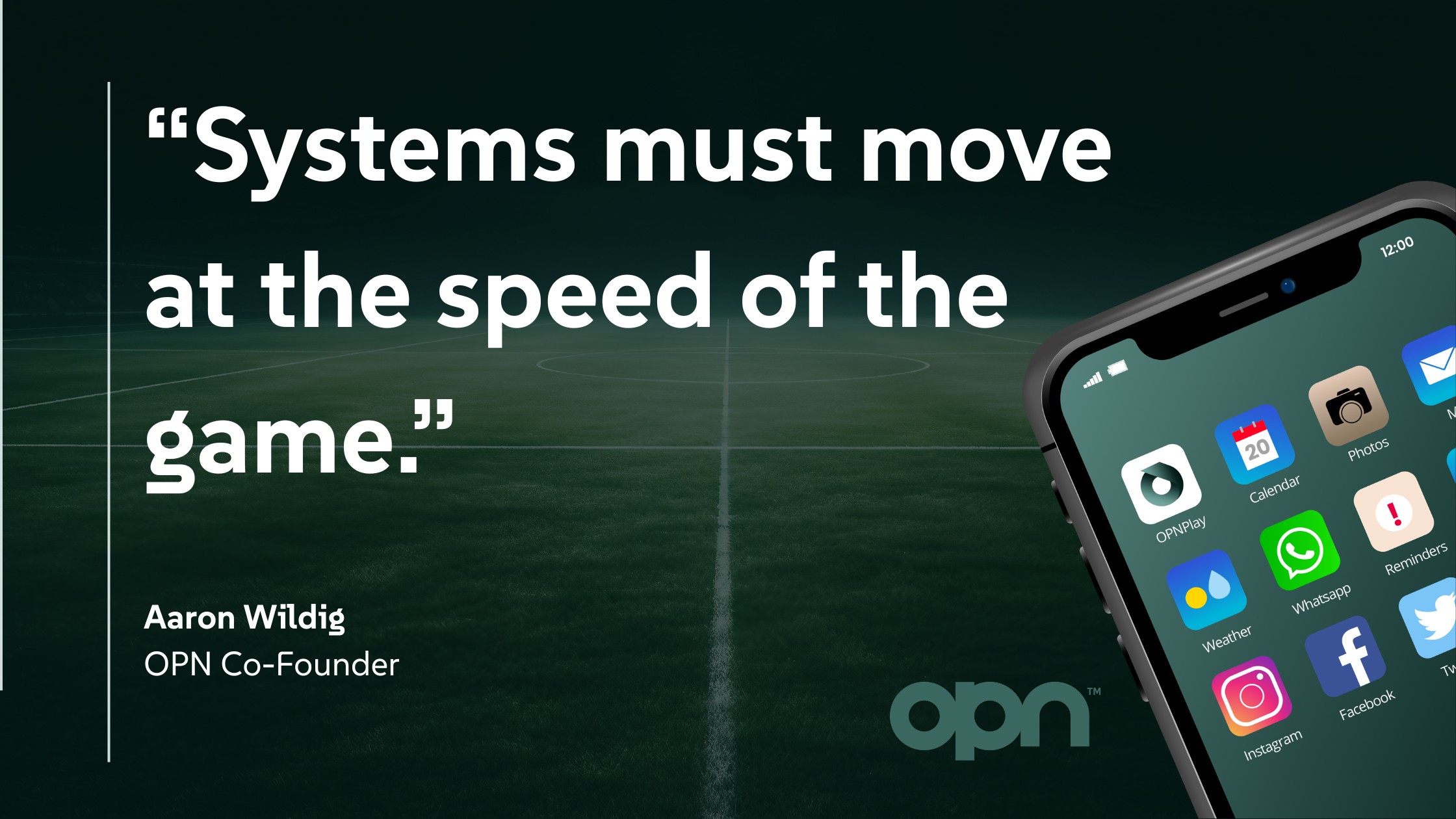
Systems Must Move at the Speed of the Game
Football environments operate under pressure.
Fixture congestion.
Injuries.
Late transfers.
International breaks.
If a system requires too many steps, too many clicks or too much manual adjustment, it slows the environment down.
The most effective performance tools feel integrated into the weekly rhythm. They reduce friction. They make individualisation scalable rather than chaotic.
That has been a key focus for us: working hard refining workflows, simplifying programme creation with club feedback and improving clarity across the platform - not by adding more layers, but by making the right layers stronger.
Those conversations have reinforced something important…
Built With the Game
Over the past year, we’ve worked closely with clubs who have been generous with their time, honest with their feedback and patient as we’ve refined the platform.
Those conversations have reinforced something important…the best performance systems aren’t the loudest, they are the ones that feel natural inside the environment.
OPN 2.0 is all about alignment with how the modern game actually operates and we will be sharing more soon.
By Aaron Wildig
OPN Co-Founder & Director of Football